

Learn how to create Christ-centered, faith-driven goals that glorify God and strengthen your faith all year long. In this article, I’ll be sharing 6 simple steps to set New Year goals that honor God and grow your faith. Christ-centered goal setting made easy.
TLDR (To Long Didn’t Read)
Even though I highly recommend reading the whole article, sometimes time just doesn’t allow. I get it, you’re busy and you have things that require your attention. More important things than sitting here for 10-minutes to read another goal-setting guide. Although I don’t believe this is just another goal-setting guide, this section is for those who just want the gist. Enjoy!

Yes, goals are still worth setting because humans need their lives to be filled with purpose. The primary way to fill our lives with purpose is to create goals that are Christ-centered.
We do this by prayerfully considering the desires that we have.
Then, we make a list of everything that we want to do in the year.
Then, it’s important to review the list and see what sticks out the most.
Next, it’s time to evaluate our current resources and see if there’s anything on our list that can be accomplished within the confines of those current resources.
Some resources to consider are (1) financial, (2) Time, (3) Energy, and (4) whatever’s currently on your schedule.
With that in mind, we can then choose the top 3 desires from that list we made.
Those desires should either (1) fit into the limits set by our current resources or (2) we need to be willing to make realistic changes to our resources in order to make those desires fit.
Throughout this whole process, we are prayerfully seeking the Lord’s will and guidance. We want to always pray for clarity, wisdom, and direction and then be willing to accept what we are given with an open-mind and willing heart.
At this point, we then take the desires that we feel called to pursue and turn them into SMART goals. You can grab your free Christ-centered SMART Goals worksheet here so that you can fill out your very own prayer-filled plan!
This guide concludes by defining that our ultimate goal as Christians is to bring glory, honor, and praise to our Lord and Savior Jesus Christ. We do this by pursuing goals that align with His will for us and can be used as a testimony that shares the love and grace of Jesus with others.
Are Goals Still Worth Setting?
Success can be seen all over the world. We can see it even in our own communities and sometimes as close as our own families. But what is true success?
What does achieving success actually amount to? What type of security can success fill you with?
Every year, we see January all over again. And with January, we see the words New Year’s Resolutions and goal setting. We see a lot of “resolutions” and “goals” to lose 20lbs, eat out less, make more money, and so on.
But how many of our new year’s goals do we actually reach? According to this article from Forbes, approximately 22% of the Americans who participated in a poll about New Year’s Resolutions actually kept their resolutions going for 2-3 months into the new year.
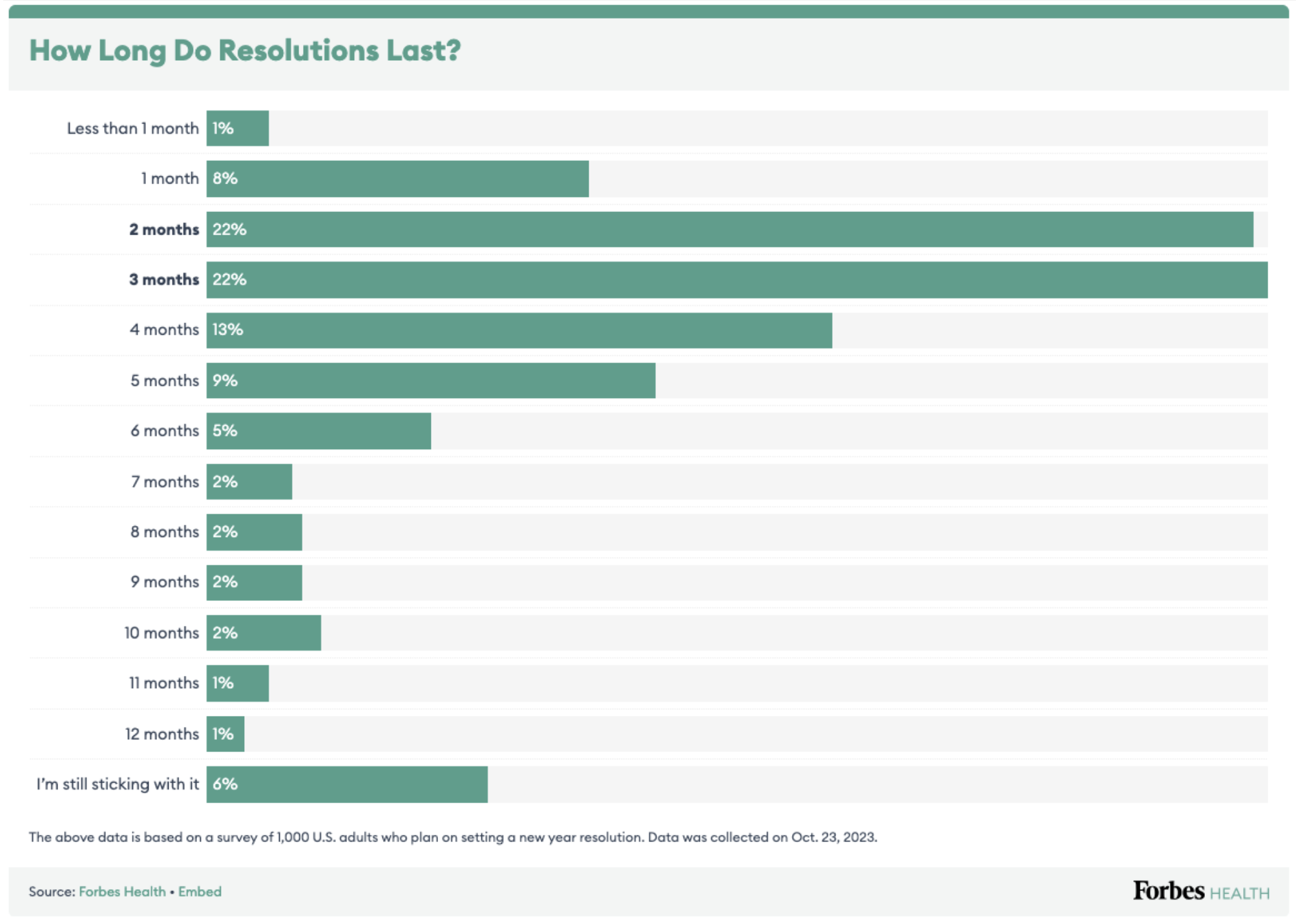
Only 5% of the group actually kept their New Year’s Resolutions going up to halfway through the new year!
My question (which I hope you’re asking too) is why does this keep happening year after year? What are we missing from American culture that both prompts us to set New Year’s Resolutions and prevents us from following through with them.
Fun fact, New Year’s Resolutions or the concept of annual self-improvement goals have been around since the Babylonian era and are a significant part of various religious practices around the world, including in Christian culture.
People all over the world practice the tradition of making a goal each year. But the unfortunate reality is that most goals tend to go unachieved. Does this mean we should give up on setting goals altogether?

Goals With Purpose
I’ve dreamed of having my own business since I was about 15-years-old. From then to now, that dream remains strong inside me.
Even after many attempts, some successes and many fails, I’m as determined as ever to make this dream a reality.
But how did I figure out this dream is something that I’m not meant to give up on, rather continue pursuing until it becomes my reality?
That’s where a lot of prayer, trial, and error come into play. You see, anything that’s worthwhile in life takes effort.
That means that, like most things (getting a degree or certification, landing a dream job, traveling to Europe, etc), starting a business requires planning, preparations like learning skills, and then executing everything in a timely manner.
Aka, goal setting…
Seeking God’s Will
As you may already know, the purpose of setting goals is to have some kind of motivation for making a desired change in your life.
Obviously, not all goals are created equally. That’s why, as Christians, it’s important to not just look at goals or the desire to improve, but to also consider God’s will for your life. By prayerfully seeking God’s will, you can set goals that you can be proud to work toward.
Goals that won’t take you away from the number one priority of bringing glory to the Lord.
Goals that won’t interfere with your life, but will actually enhance your life greatly!
Seeking God’s will can also provide clarity and direction on the how-to aspect of accomplishing your goals.
Remember that Jeremiah 29:11-13 (NIV) tells us,
“For I know the plans I have for you,” declares the Lord, “plans to prosper you and not to harm you, plans to give you hope and a future. Then you will call on me and come and pray to me, and I will listen to you. You will seek me and find me when you seek me with all your heart.”
In other words, when we choose to invite the Holy Spirit into our goal planning process, we aren’t just creating yet another unachievable goal. We are creating goals that are Christ-centered and Spirit-lead.
The amount of peace that comes from this type of goal planning leads to a lasting sense of fulfillment and satisfaction—even if the goal changes along the way.
So, to answer the question “Is goal-setting still worth it?” I’d say yes… Here’s why.
The Importance of Goal-Setting
In life, humans need a sense of purpose to get out of bed each morning. To make meaningful decisions. To choose life, well-being, and the pursuit of happiness.
Without purpose, humans are aimless creatures simply going through the motions.
But when you mix in something meaningful like striving towards something greater than yourself, you get a whole new meaning to living.
Of course, living for Jesus can bring a great sense of overwhelming purpose. But the reality is that the honeymoon phase of being a new believer will wear off. Just like with any love and passion-filled relationship. There needs to be something more.
A deeper purpose.
Every Life Needs Purpose
A specific goal that you can achieve little by little over the course of your life. The type of goal that one might actually refer to as a calling.
And while this article isn’t going to deep-dive into how to find your Christian calling. It’s important to mention because your calling is the foundation of that deeper purpose.
It’s the springboard and fountain from which your desires will pour out of.
When you’ve discovered your calling, you gain the ability to establish clear, achievable goals. Not just SMART goals, but goals with a purpose. A greater purpose than just checking off ‘To-Do’ lists or tracking pages in a journal.
There’s nothing wrong with those tools. But that’s just what they are…tools. Tools to help you get 1% closer to your desired outcome (James Clear, Atomic Habits).
When you use your calling as the fountain from which all of your decisions are built off of, you are giving yourself the freedom to create goals that won’t just bring your great fulfillment.
These goals will now participate in serving that greater purpose of bringing glory, honor, and praise to the Lord God Almighty. To the One who breathed into us the breath of life.
So make sure to prayerfully seek the Lord’s will regarding your specific God-given calling. Once you have even the slightest idea of what this looks for your life, you will then be able to move forward with creating meaningful goals that are worth sticking with.
Goals you can confidently pursue as a form of praise and worship.
This is the first step in creating Christ-centered goals that glorify God and strengthen your faith along the way.
👉 Related Article: How To Develop a Growth Mindset

How To Create Christ-centered Goals
1. Pray. A lot.
Before you begin planning out your goals for the year, it’s imperative that you stop and pray. This is something I tend to do constantly when I’m trying to figure out what to focus on. For the simple reason that without prayer how can I know what the Lord wants me focusing on.
As someone whose number one life goal is to glorify the Lord and be within His will, praying throughout the whole process has now become a no-brainer.
The Scripture I like to remember is 1 Thessalonians 5:16-18 which says
“Rejoice always, pray continually, give thanks in all circumstances; for this is God’s will for you in Christ Jesus” (NIV).
This short passage is a great reminder of what’s expected of followers of Christ.
If you haven’t tried praying over your plans before actually executing them, it’s something I highly recommend. You can avoid so much headache and frustration by simply seeking the Lord first and always.
2. Make a List of All The Things You Envision Yourself Doing Within The Next 12-Months.
The next thing I typically do is make a list that’s way too long. I always have so many things I want to do, but realistically, there’s never enough time and other resources to get it all done.
Either way, it’s important to write everything out, preferably by hand (there’s just something about handwriting lists that really helps the mind to feel a sense of relief).
Plus, handwriting helps you to further solidify for yourself whether or not something is relevant to your life right now or ever.
List-making is a great way to brain dump all your thoughts without feeling obligated to produce complete sentences or proofread yourself (just me?).
Usually, after I see my list of way too many things, I can take a step back and evaluate what’s standing out to me.
It’ll be those things that I will focus more thought on and decide whether or not they are the things that need to become my goals.
3. Write out your current resources: this will help you figure out how much time, money, and willingness you’re actually able to put forward this year.

Ok, so this is the part where we have a reality check. Yes, we have this long list of things we’d like to do. But the reality is that we still only have 24-hours in a day. And at some point sleep needs to happen…right?
After I review my list, I like to think about my resources. Things like:
- Money
- Time
- Energy: Mental, physical, emotional, and spiritual energy should all be considered.
- Current schedule and responsibilities
For the sake of this guide, though, I want to take this a step further. We’re not just going to think about these things. We’re actually going to write it all down (if you haven’t already been doing this).
If you have a budget for managing your finances, this would be the time when you’d consult your budget to see if you have the financial resources to accomplish some of the things on your list.
Next, whether you keep a planner or not, it’s important to write down all the things that are currently part of your day.
For example, I’m a housewife with no kids. So that means I have to think about the maintenance and housekeeping of our home. The time it takes to clean and maintain things. The energy required to prepare and cook meals, do laundry, etc.
I also have fitness goals, so I have to consider the time and energy needed to exercise a few days a week. As a personal trainer and health coach, I have the skills to plan out my wellness and fitness routine, but I also have to consider everything in my life from a holistic perspective.
Once you’ve considered your current resources and how your time, energy, and money are currently being utilized, you can begin to move on to step 4.
4. Prioritize. Pick the top 3 things you can actually accomplish within the confines of your current resources.
To prevent overwhelm, a best practice for goal planning (not goal-setting) is to pick the top 3 things that not only stick out to you the most from your list, but also fit into the boundaries that are naturally set by your current resources.
If, for whatever reason, your current resources don’t match the goals you’ve chosen. You can do one of two things.
- See where your resources can be adjusted to meet the requirements for your goal(s).
- Change which goal(s) you’re going to focus on.
This is part of the reality check for creating goals that are actually achievable.
Plus, the last thing you want is to plan out a goal that takes away from another important area of your life. This is also why I began with the encouragement to pray throughout this whole process.
The Lord will guide you and give you wisdom on which goal(s) are the best fit for your life right now.
Be wary of trying to force goal(s) that don’t feel right. No matter how strongly you feel about it, not every desire we have is from the Lord. We are still human beings with a sinful human nature. That means that some of our desires are going to be human-nature-based desires.
Ultimately, you should desire to bring glory, honor, and praise the Lord. That means that everything you choose to do with your resources needs to meet that standard. The easy way to know whether or not a desire is from the Lord is to pray and ask Him for clarity and direction.
Believe me, when you ask the Lord to give you those two things from a genuinely willing heart, you will receive them. It’s then up to you whether or not you follow through or ignore the gift of clarity and direction you’ve been given.

5. Let’s Make Them SMART (yes, we still want to do this)
Great! You’ve made it to step 5! This is the fun part. The part where we get to take those desires and turn them into achievable goals with realistic results.
The concept of SMART goals isn’t new. But in case you’re not familiar with it SMART is an acronym for:
- Specific
- Measurable
- Achievable
- Relevant
- Time-bound (your deadline for achieving the goal)
Setting up your SMART Goals
Let’s break down each part.
To make your goal specific, you’re going to reword it.
Example
Instead of: I want to start a blog this year.
Make it Specific: I want to publish 12 blog posts.
Hopefully you see the drastic difference between those two statements. One is open-ended. It leaves everything up in the air and doesn’t give you anything solid to work towards. The second, the specific statement, provides you with a solid footing. It specifically states what you want to do.
We now have a specific desire that we can use a firm foundation for the rest of our SMART goal.
The next step is making your SMART goal measurable. This is super simple to do. When something is measurable it means that it can be tracked. Hurray! You can pull out your tracker planners and other tracking tools to help you achieve this goal!
Example
Instead of: Write 12 blog posts this year.
Make it Measurable: Write 1 blog post each month and publish it by the third week of the month.
Now we have something solid that we can track. We know that one blog post needs to be written and published no later than the third week of each month. You can now create a simple tracker to stay on top of the tasks involved in writing and publishing a monthly blog post.
Next, we need to make our SMART goal achievable. The simplest way to do that is to break it down into trackable milestones.

Example
January
Week 1:
- Make a list of topics or ideas for the rest of the year. At least 30.
- Research 2 topics and brain dump ideas for each one.
- Using Google, Pinterest, and YouTube, search for keywords that match the topic/idea you want to write about.
Week 2:
- Outline 1 blog post using the top 3 keywords and phrases that match your topic.
- Write the blog post using H2 headings. Max of 1,500 words.
Week 3:
- Edit and proofread blog post.
- Use the Yoast SEO plugin to make sure your post is optimized for search engines.
- Create 3 Pinterest graphics to promote your article on Pinterest.
- Copy and paste article into WordPress.
- Hit Publish.
- Schedule out your 3 graphics on Pinterest, one per week for the next 3 weeks.
Week 4:
- Do keyword research for next blog post.
- Outline 1 blog post using the top 3 keywords and phrases that match your topic.
- Write the blog post using H2 headings. Max of 1,500 words.
This is how you turn your goal of writing 12 blog posts this year into something achievable. Once you’ve outlined specific milestones or tasks that you can track, you’ve created a plan that can be tracked.
Each task in the plan has a measurable outcome. When you complete each task, you have accomplished a milestone on the way to achieving your goal!
Get some perspective
After you make sure that the goal is achievable, it’s time to determine whether or not it’s relevant to your current season of life. or where you’d like to be.
Since you’ve been prayerfully planning out your goals from step one. Part of the process is to continue to evaluate (with the Lord’s help) whether or not this goal is relevant to God’s will.
Of course, if you feel a sense of certainty, then you’re good. But it’s at this point in time where you want to look over everything you laid out. Use a critical eye and be willing to scrap the plan if something about it feels off.
It may be helpful to step away and come back to it in 30-minutes or even the next day. Enough time to go do something else, get your mind off it, and come back refreshed with perspective.

Everyone creates SMART goals a little differently. The key thing here is that you’re not just creating another SMART goal. You’re creating Christ-centered goals that are for the sole purpose of glorifying God.
These types of goals can take a little more time and thought. Whatever you do, don’t be afraid to pursue something that you strongly feel the Holy Spirit’s peace about.
Not every person in your life is going to understand why you’re choosing to pursue something.
Your number one priority is to please the Lord. If you’ve sought the Lord’s will. If you believe, whole-heartedly, that this goal is something He’s calling you to do. Then do it.
Don’t allow anyone to get into your head and influence you into believing anything else.
Last, but not least
All good SMART goals are time-bound. Meaning, they have a deadline. Of course, some goals might seem like they should be more open-ended such as fitness goals. But even those types of goals can have deadlines for certain milestones.
To continue with our blogging example, we’ve outlined that the goal is to write and publish 12 blog posts this year. We’ve created a measurable and achievable plan. We stepped away and re-evaluated the plan’s relevance by getting some perspective. Now, we need to create some deadlines for the goal.
Obviously, the plan does already have a few built in deadlines. We’ve planned to publish 1 blog post by the third week of each month. This is a great start. The next deadline we need, however, is by what point at the end of the year do we want to have this goal accomplished.
The nice thing about having outlined some milestones, is that we’ve got a built-in deadline. The third week of the month. However, there’s something more to consider here. November and December tend to be pretty busy months.
If you’re in the US, like I am, then you’re probably celebrating Thanksgiving and Christmas or some form of those. Which means that you may not have a whole lot of time for writing blog posts during the holiday season.
Overcoming Obstacles
So what do we do about that? We can’t allow holidays and busy-ness to get in the way of our goals. Don’t worry, this is where more planning comes into play.
Even though we’ve already decided that one blog post is to be published by the third week of each month. We can adjust the plan so that we fit in an extra blog post for a few months.
I know this sounds scary. Adding in some extra work will take time and energy. But, if this is something that’s not only important to you, but also in line with the Lord’s will, He will give you the strength and perseverance to push through.
When times get rough, this is the point when we want to fall back on our why or the reason that’s motivating us to pursue this goal to begin with.
I didn’t mention this before now because if you’ve been prayerfully planning out your goals, you’ve already got your why. If, however, you feel like you need a strong reason to push through, don’t be afraid to re-evaluate things and ask the Lord to remind you of why you’re doing this to begin with.
When we include the Lord in every aspect of our lives, it’s truly incredible how much more we can accomplish. Because we’re no longer doing things from our own strength, but rather from His strength. Which is almighty!
With all of that in mind, we can take another look at our blog post publishing goal and make the necessary adjustments to meet the deadline of having 12 blog posts published by the end of the year.
As I write this, it’s the week before Christmas 2025. I’ve made the goal that I want to publish 2 blog posts in January. With having just moved and finally feeling a bit more settled, I made the time to get back planning and writing in order to achieve this goal.
This blog post is scheduled to go live on Lifestyle of Home (the website you’re on) Sunday, January 4th, 2026. But in addition to this post, I also have other blog related tasks that need to get done in order to make sure that I can get eyes on it. Promoting this blog post on Pinterest, for example.
I’m also fighting the onset of a head cold and persistent watering eyes (making it hard to see the computer screen 🤣). I share all of this as an example of how I’m pushing through a time crunch and trying to get sick in order to achieve this goal (don’t worry I’m taking care of myself).
6. Pray Some More and Give It All To The Lord.
When all is said and done, your goals, desires, and dreams are all in the Lord’s hands. If you can trust that He is in control and that His plans and timing are perfect, then you won’t need to give into worry or fear.
Instead, allow this Christ-centered goal planning process to strengthen your faith. Give God the glory by pursuing goals that He has laid on your heart. Never be afraid to testify to all the good that He has done in your life and through your life.
Open and close your goal planning session with prayer because the prayer is the most powerful tool in the Christian’s toolbox. With prayer, we have a direct connection to our Savior and King.
Through Bible study and prayer we are given the opportunity to commune with the One who created the heavens and the earth. The One who knit us together in our mother’s womb.
Allow this time to be one of worship. Time that can continue to nurture your relationship with the Lord and draw you closer to Him so that you can be better used by Him to bring Him glory, honor, and praise.
Remember that the Christian’s number one goal in life should be to bring glory to Jesus Christ. That means showing up for your God-given goals and letting His grace and glory shine through you as you work towards achieving them with His help.
The Ultimate Goal

Just because you’re a Christian doesn’t mean you stopped being a human with desires and dreams. There are many things that happen when you become a Christian and begin surrendering your life to Jesus. One major change is that your desires and dreams can change if they don’t align with God’s will for your life.
When you’re seeking the Lord and desiring to grow spiritually, the Holy Spirit works in you. You begin to experience a total transformation. That’s why we have the Christian term of “being born again.”
When you become a Christian, your old self dies away and you take on a new life in Christ. While this is a topic for another day, it’s important to mention it.
With this new life in Christ, the Holy Spirit within you fills you with desires that are given to you by God.
The number one desire we are filled with is the desire to please the Lord. That means that all you should want to do is work toward things that are going to bring glory, honor, and praise to the Lord.
Your goals, desires, and dreams become part of how you do that.
When you’re diligently seeking God’s will, He removes the desires and dreams that aren’t for you. He replaces them with the ones that are.
That’s why you want to prayerfully consider and plan your goals with God’s will in mind. And only pursue those things that the Holy Spirit fills you with peace and empowerment to accomplish.
A Piece of My Story
Earlier, I mentioned how I’ve had the nagging desire to have a location-independent online business since I was 15-years-old. Of course, I didn’t know the first thing about how to actually go about doing this or whether or not it was even possible.
Fast forward to today, I’ve spent the last 8 years learning everything I can about online business.
Through trial and error, monetary investments, and lots of prayer…Accompanied by thousands of hours of research, hundreds of written pages of goal lists, and several certifications later…I finally know what I’m doing.
And here we are. This blog. My YouTube Channels. And my endless, unwavering desire to spread the love of Jesus through practical resources that will hopefully make a difference for even just one person.

Closing Thoughts
This isn’t your typical how-to set goals blog post. This article doesn’t just give you a generic, step-by-step guide on how to create smart goals.
It gives you the foundational information you need in order to understand that the only way to set Christ-centered goals is to seek to honor Jesus with your life first.
This and other blog posts on this website are designed to help you refocus your mind from the things that are self-serving to the things that are God-honoring and Christ-centered.
I hope you found this guide helpful. If you didn’t already, be sure to grab your free Christ-centered SMART Goals worksheet now so that you can fill out your very own prayer-filled plan!
Up Next…
How To Discover God’s Will For Your Life! This guide is packed with helpful tips and a simple prayerful process you can follow to find your Christ-centered calling.










A really good blog and me back again.
Thank you! Glad you enjoyed the blog post 😊
Very good i like it
Thank you!
wish you all the best
Thank you! Same to you!
每日AI工具导航
Sorry, I don’t understand your comment. Please only comment in English. Thank you.
wish you best and best
Thank you! Same to you!
色即是空,空即是色
Sorry, I don’t understand your comment. Please only comment in English. Thank you.
无话可说,只是看看
Sorry, I don’t understand your comment. Please only comment in English. Thank you.